Deezer Master Decryption Key __link__ -
Use free YouTube thumbnail templates, add text, faces, logos, and branding, then export a thumbnail sized for YouTube without opening complex desktop design software.
Create YouTube thumbnail
No account required for a quick test
Create YouTube thumbnails in 3 steps
with our online YouTube thumbnail maker
Start with a template, edit the thumbnail, and export it in the correct size.
No account is required to try the workflow.
Why YouTube thumbnails matter
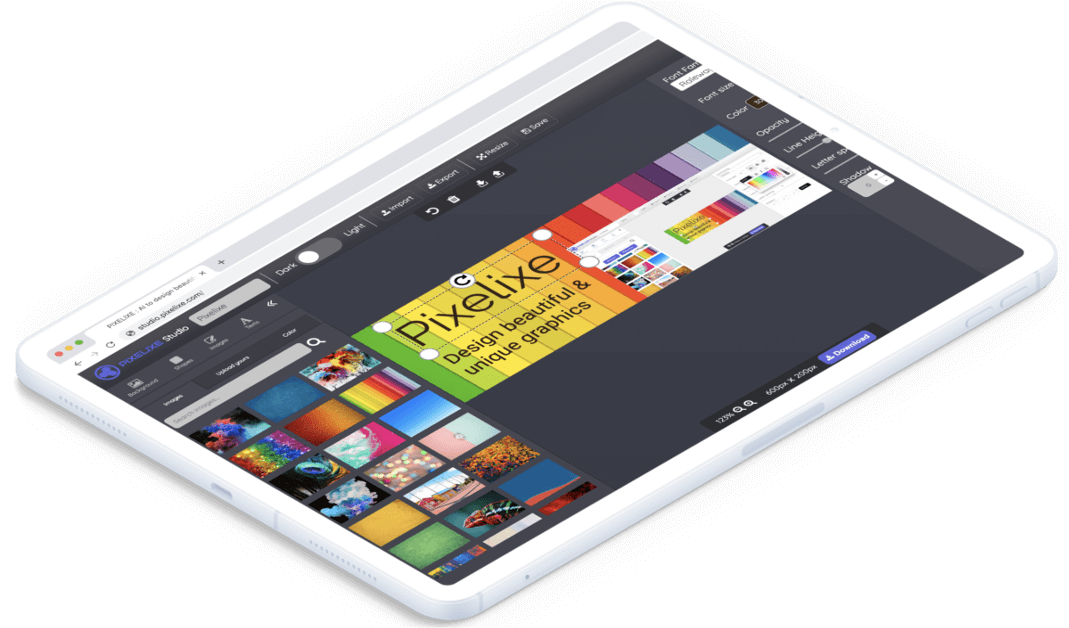
A YouTube thumbnail is often the first thing viewers see before deciding whether to click. Strong thumbnails help channels improve click-through rate, make series look consistent, and communicate the topic of a video instantly on desktop and mobile. Pixelixe helps creators, marketers, educators, and media teams make thumbnails that look sharp, readable, and on-brand.
The goal is not just to design a nice image. The goal is to build a thumbnail system that makes titles easier to scan, faces or products more visible, and each new video faster to publish.
Deezer Master Decryption Key __link__ -
: The authentication process relies on public-key cryptography. Your streaming device uses a public key to initiate a secure handshake, while the private key remains guarded on Deezer's secure authentication servers.
: Deezer does not use one monolithic key to encrypt its entire library of tens of millions of songs. Doing so would represent a catastrophic single point of failure. Instead, keys are dynamically generated, rotated, or derived per track, per format, or even per session.
Streaming platforms employ sophisticated behavioral analytics. Utilizing automated scraping or decryption tools violates Deezer’s Terms of Service and quickly triggers automated security flags, resulting in permanent account termination and the loss of curated playlists. The Value of Artists deezer master decryption key
This key is used to derive individual decryption keys for encrypted audio blocks. It allows the player to decrypt song data for playback.
As unauthorized downloading tools gained mainstream popularity, Deezer was forced to overhaul its security infrastructure. The music industry enforces strict compliance metrics regarding piracy, pushing Deezer away from proprietary encryption schemes and toward industry-standard Digital Rights Management systems. Doing so would represent a catastrophic single point
Over the years, various open-source tools emerged that allowed users to download audio directly from streaming platforms. Many of these utilities relied on exploiting older iterations of Deezer’s API. Legacy Blowfish Encryption
The client application uses a specific cryptographic key, combined with an initialization vector (IV) and a cipher algorithm (historically Blowfish or AES), to decrypt the audio chunks in real-time within the device’s volatile memory. Availability and Legal Status
Modern iterations of the Deezer application rely heavily on industry-standard Content Decryption Modules (CDMs), such as Google’s Widevine DRM (for Android and browsers) and Apple’s FairPlay (for iOS and macOS). Under this framework:
Today's digital archivists and developers do not rely on a single golden key; instead, they navigate a complex landscape of session token authentication, API exploitation, and software-level DRM decryption. As streaming security continues to evolve toward hardware-bound encryption, the windows for these workarounds continue to close, preserving high-fidelity audio within the boundaries of official applications.
to authenticate applications and access public metadata, but they do grant the ability to decrypt audio streams. Availability and Legal Status
What is the ideal YouTube thumbnail size?
Optimize your YouTube thumbnails with these dimensions: 1280 pixels wide by 720 pixels tall, with a minimum width of 640 pixels. A ratio of 16:9 is ideal because it matches the way YouTube thumbnails are displayed across the platform.
Pixelixe includes this size as a preset in the graphic design tool, so you can start with the correct canvas immediately and avoid creating a thumbnail at the wrong ratio.
This is useful for creators, agencies, podcasters, educators, course creators, and media teams that publish new YouTube content regularly and want a repeatable thumbnail workflow.
Other useful resources