Beastiality Zoofilia Zoophilie Animal Horse Dog Beast Cumshots Compilation 22 __exclusive__ Now
When behavior modification and environmental enrichment are not enough to resolve severe anxieties or compulsive disorders, veterinary science utilizes psychopharmacology. Just like humans, animals can suffer from generalized anxiety, panic disorders, post-traumatic stress, and obsessive-compulsive behaviors (such as psychogenic alopecia in cats or tail-chasing in dogs).
The endocrine system heavily influences behavior. Hyperthyroidism in cats often presents as sudden irritability, increased vocalization, restlessness, and even aggression. Conversely, hypothyroidism in dogs has been linked to increased fearfulness, anxiety, and reactivity. Cushing’s disease (hyperadrenocorticism) causes an overproduction of cortisol, leading to restlessness, pacing, and increased irritability due to chronic stress. 3. Neurological and Cognitive Decline
These signs are not just "quirks." They are biomarkers of a physiological stress response involving cortisol, adrenaline, and neuroendocrine pathways. By ignoring them, a vet misses half the diagnostic picture. and social enrichment
Animal behavior is not a niche specialty but a fundamental lens through which all veterinary medicine should be viewed. A dog that trembles during an exam, a horse that refuses to bear weight on a limb, or a cat that hides post-surgery is providing a behavioral dataset as valuable as any blood panel. The future of veterinary science lies in treating the whole animal – its emotional state, its environment, and its expressive behavior – alongside its organic pathology.
Examples include tail-chasing in German Shepherds, flank-sucking in Dobermans, or psychogenic alopecia (over-grooming) in cats. These are often rooted in genetic predispositions and triggered by stress or lack of environmental stimulation. Treatment requires an overhaul of the animal's daily enrichment combined with serotonin-boosting medications. Ethics, Welfare, and One Health pheromone diffusers (like Adaptil or Feliway)
Veterinary science has begun borrowing heavily from human psychiatry. The use of in animals is a booming field that perfectly exemplifies the behavior-science merger.
Using treats, pheromone diffusers (like Adaptil or Feliway), and non-slip mats. and non-slip mats.
Environmental enrichment is a crucial aspect of animal welfare, particularly in captive settings such as zoos, sanctuaries, and research institutions. This review aims to summarize the current state of knowledge on the effects of environmental enrichment on stress reduction and welfare promotion in captive animals. We examine the various types of enrichment strategies, including physical, sensory, and social enrichment, and discuss their impact on behavioral and physiological measures of stress and welfare. Our analysis reveals that environmental enrichment can significantly reduce stress and promote welfare in captive animals, improving their behavioral and psychological well-being. We also highlight areas for future research and provide recommendations for the implementation of effective enrichment programs in various captive settings.
Tail chasing, shadow chasing, flank sucking, and pica (eating non-food items) are not "boredom." In many breeds (Bull Terriers, Dobermans, German Shepherds), these are genetic compulsions analogous to human OCD.
Habituation occurs when an animal stops reacting to a harmless, repeated stimulus, like traffic noise. Sensitization happens when a stimulus causes an increasingly intense reaction, such as a worsening fear of thunderstorms. Behavioral Signs of Medical Issues
The synergy between behavior and veterinary science extends far beyond companion animals. In production medicine (livestock) and zoological settings, behavioral management is a cornerstone of welfare and economic viability. Livestock and Production Medicine
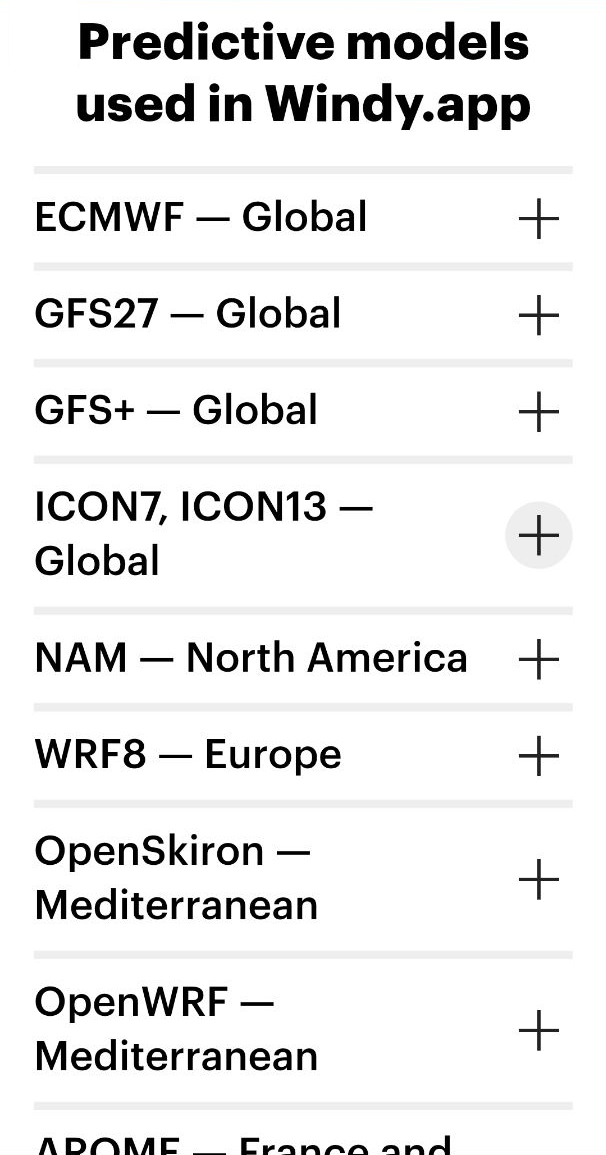
We are sorry, but this model is available only in the App


Or if this model is important for you in the web - please let us know at [email protected]